10 Operational Advantages of Short-Run Label Production with HP Indigo
- Home
- Blog
10 Operational Advantages of Short-Run Label Production with HP Indigo
For many years, the primary approach in label production was to manufacture as many labels as possible in a single production run in order to reduce the unit cost.
Today, however, increasing product variety, more frequent packaging updates, regional product variations, promotional campaigns, and rapidly changing market conditions are forcing brands to rethink this approach.
Many brands now manage dozens of SKUs within the same product family. Each SKU may require a different packaging design, language, regulatory information, or marketing message.
In this environment, short-run production means much more than simply producing a small quantity of labels. Its real value lies in reducing inventory risk, accelerating time to market, enabling more flexible production planning, and allowing companies to respond more quickly to changing market demands.
HP Indigo digital printing technology is one of the solutions developed to address these needs.
In this article, we will examine the operational advantages of short-run label production with HP Indigo in detail.
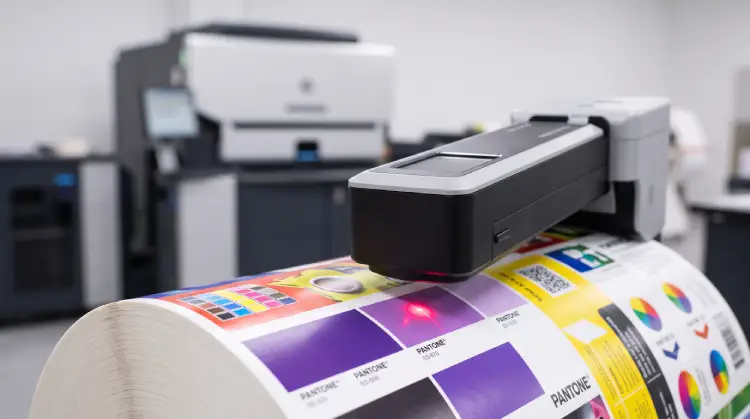
What Is Short-Run Production?
The definition of a short run varies depending on the industry and application.
For some manufacturers, 5,000 labels may be considered a short run, while in other applications, even 100,000 labels may be classified as a short run.
For this reason, it would not be accurate to define a short run solely by quantity.
A more useful question is:
What is the relationship between total setup costs and production costs?
When setup costs represent a significant portion of the total cost of a job, short-run production strategies can become more advantageous.
Why Is Short-Run Production Becoming More Important?
Three major changes are reshaping the label industry.
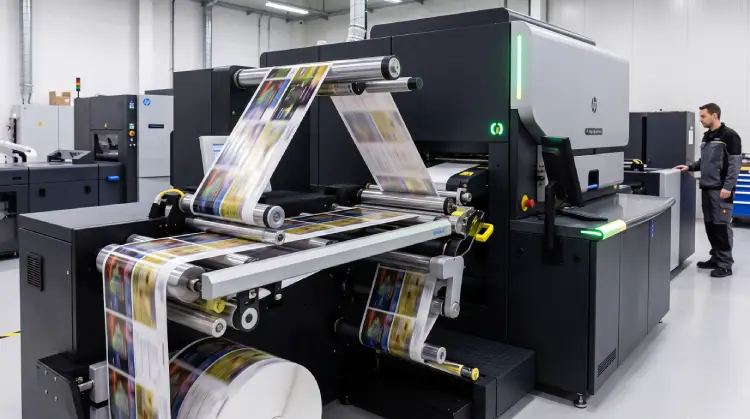
1. Increasing Numbers of SKUs
In the past, a single label design was often sufficient for a product.
Today, brands may have:
* Different flavors
* Different package sizes
* Different sales channels
* Different country versions
* Special promotional editions
All within the same product family.
As a result, a single product family may require dozens of different SKUs and label versions.
This makes large-volume production planning increasingly difficult.
2. Shorter Product Life Cycles
Products no longer remain on the market for years with exactly the same design.
Brands frequently:
* Launch promotional campaigns
* Update packaging designs
* Revise packaging information
* Update regulatory content
Large inventories of pre-printed labels can create significant risks when such changes occur.
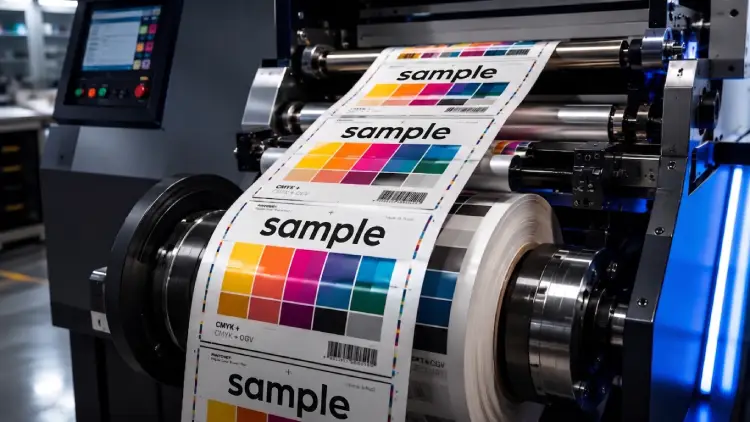
3. Faster Time-to-Market Requirements
New product development cycles are becoming increasingly fast.
Many brands can now launch new products within weeks rather than months.
This requires label production systems that can respond quickly and efficiently.
Why Is HP Indigo Well Suited for Short Runs?
Plate-Free Production
One of the key advantages of digital printing is that it does not require traditional printing plates.
This can provide several benefits:
* Reduced setup times
* Easier design changes
* Lower preparation costs for smaller quantities
However, an important point should be emphasized:
Digital printing is not always the most economical solution.
As volumes increase, flexographic and other conventional printing technologies may offer economic advantages for certain applications.
The important factor is to evaluate the total production cost for each job.
Reduced Job Changeover Times
In label production, cost is not limited to the actual printing time.
The following processes can also create operational workload and cost:
* Job preparation
* Color adjustments
* Plate changes
* Cleaning
* Quality control
* Changeovers between jobs
These processes become particularly important in short-run and multi-SKU production environments.
HP Indigo technology can help make job changeovers more agile and improve overall production efficiency.
Advantages for Multi-SKU Production
Consider a cosmetics brand with:
* 20 different product variants
* 5 language versions
* 3 different promotional designs
This could result in hundreds of different label versions within a single product family.
Digital printing systems can make it easier to manage this level of product and design variation.
Reduced Inventory Risk
One of the biggest risks of large-volume label production is obsolete inventory.
Labels can become unusable due to:
* Design changes
* Regulatory updates
* Barcode changes
* Packaging revisions
* Product discontinuation
Short-run production can help reduce this risk by allowing labels to be produced closer to actual demand.
Reduced Capital Commitment
Labels are also an inventory item.
Stored labels:
* Occupy warehouse space
* Tie up working capital
* Create inventory management costs
Producing labels according to actual demand can help reduce these costs.
Greater Flexibility for New Product Launches
It is not always possible to predict the success of a new product in advance.
Ordering large quantities of labels before market validation can therefore create unnecessary risk.
Short-run production can support:
* Market testing
* Pilot production
* Regional launches
while reducing exposure to excess inventory.
Benefits for Export-Oriented Companies
Products sold internationally often require market-specific labeling.
* Germany
* France
* The United Kingdom
* Spain
Each market may have different requirements regarding:
* Language
* Regulatory information
* Recycling symbols
Digital printing can make these market-specific variations easier to manage.
Advantages for Promotional and Seasonal Products
Special campaigns and seasonal products may require temporary label designs.
Examples include:
* New Year campaigns
* Ramadan campaigns
* Eid campaigns
* Black Friday
* Valentine's Day
* Limited editions
Short-run production allows brands to produce only what they need without creating excessive inventory.
A Powerful Combination with Variable Data Printing
Short-run production becomes even more flexible when combined with variable data printing.
For example, each label can contain different:
* Serial numbers
* QR codes
* Promotional codes
* Batch information
* Manufacturing dates
Every label can contain unique information without disrupting production efficiency.
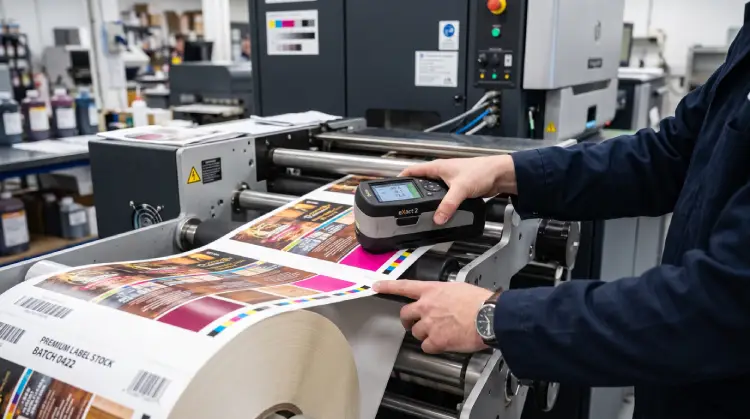
Integration with Pantone Color Management
Short-run production does not mean compromising on color consistency.
HP Indigo systems can use:
* Color profiles
* Calibration processes
* Measurement systems
to help maintain consistent colors across repeat orders.
Internal Link Recommendation:
How Is Pantone Color Consistency Achieved with HP Indigo?
Industry Applications
Food Industry
In the food industry, short-run production can be particularly valuable for:
* New product trials
* Limited-edition products
* Export variations
Cosmetics Industry
Cosmetic brands often update packaging designs more frequently than other industries.
Large inventories of pre-printed labels may therefore become obsolete more quickly.
Chemical Industry
Regulatory changes may require chemical product labels to be updated quickly.
Short-run production can help companies respond to these changes more efficiently.
Pharmaceutical Industry
The pharmaceutical sector relies heavily on:
* Batch management
* Traceability
* Variable data printing
which are all making flexible production methods increasingly important.
Short Runs and Sustainability
Sustainability is not limited to using recyclable materials.
It can also involve:
* Reducing unused inventory
* Minimizing waste
* Preventing unnecessary production
When properly planned and managed, short-run production can contribute to sustainability objectives by reducing excess inventory and unnecessary production.
Comparison Table
| Criteria | Short-Run Digital Printing | Traditional High-Volume Printing |
|---|---|---|
| Design changes | Easy | More costly |
| SKU management | Strong | More complex |
| Inventory risk | Lower | Higher |
| Upfront investment | Lower | Higher |
| Variable data | Highly suitable | Limited |
| Speed to market | Faster | Slower |
Frequently Asked Questions
What qualifies as a short run?
There is no universal definition. It depends on the application, quantity, setup costs, and overall production requirements.
Is HP Indigo suitable for every short-run job?
Not necessarily. Each job should be evaluated individually based on its technical requirements, production volume, materials, and total cost.
Is digital printing always more economical?
No. For high-volume applications, flexographic and other conventional printing technologies may offer economic advantages.
Does short-run production affect print quality?
No. Short-run production itself does not determine print quality. Quality depends on the production process and quality control systems.
Can short runs be combined with variable data printing?
Yes. Digital printing technologies are particularly well suited to variable data applications.
Does short-run production contribute to sustainability?
When properly planned and managed, it can help reduce waste, excess inventory, and unnecessary production.
Conclusion
Short-run label production is about much more than producing small quantities.
Its real value lies in:
* Greater production flexibility
* Lower inventory risk
* Faster time to market
* More effective SKU management
* More controlled operational costs
HP Indigo technology can provide significant operational flexibility for brands operating in an increasingly dynamic and complex packaging environment.
Continuing the HP Indigo Digital Printing Center Series
In this article, we explored the operational advantages of short-run label production with HP Indigo.
You can also read our previous article, HP Indigo Variable Data Printing: Smart Label Solutions from Traceability to Marketing, to learn more about personalization and traceability applications.
For more information about color management, see How Is Pantone Color Consistency Achieved with HP Indigo?
In our next article, we will examine how white ink is used in HP Indigo printing and and how it affects transparent and metallic labels.
We will then continue the series by exploring premium label production with HP Indigo, quality management, and applications involving specialty materials.
CTA
If you would like to determine whether short-run label production is the right solution for your products and identify the most suitable printing technology, contact the Sancak Etiket team for professional guidance.
00+
Workers
00+
Projects
00+
Happy Customers
00+
Continent